Town Hall 2026
Saturday, April 18, 2026
Wellborn Community Center
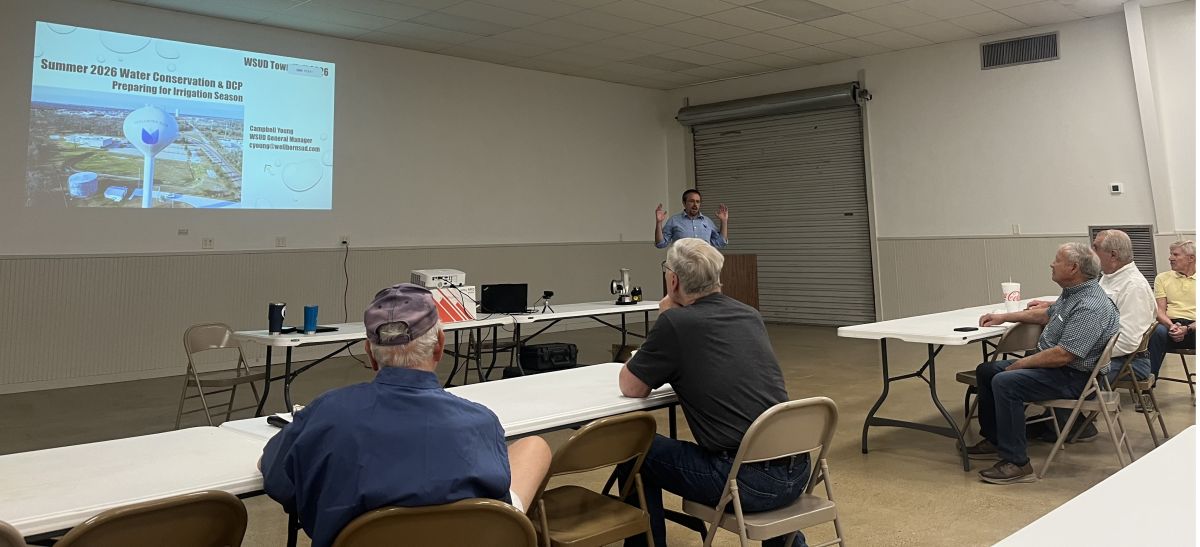
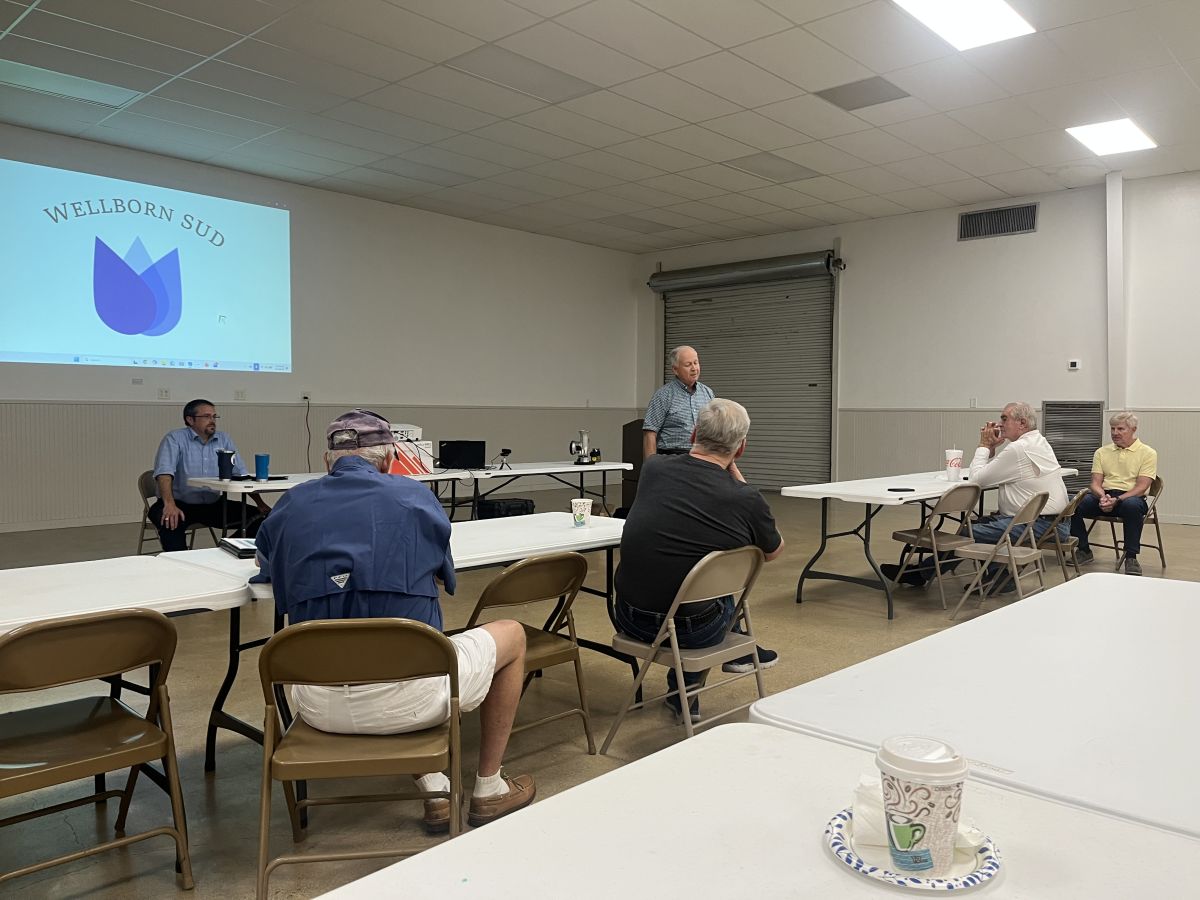
Thank you to all those who made it out to our town hall event on Saturday. There were presentations on four topics, including infrastructure projects, smart meters, impact fees, and summer water conservation. We had some great questions and met some great people. We hope you can all join us again next year!
Key Takeaways
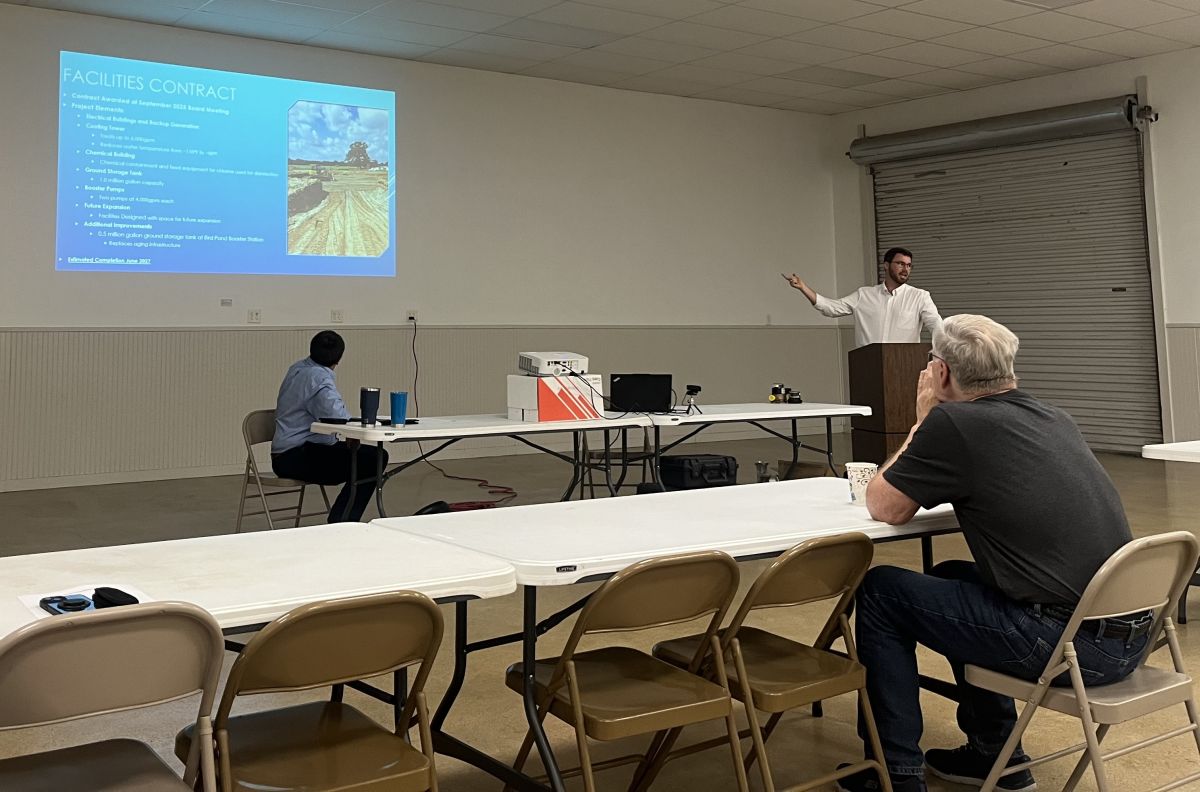
Infrastructure Projects (presentation available here)
- One well is drilled, two more to go. Each well will produce 2,000 GPM from the Simsboro Aquifer.
- Construction is underway on the treatment plant and pump station near the new well field.
- The pipeline contract has finally been bid, and the contract will be awarded at the April board meeting.
- The project will be online in early summer 2027 with limited capacity. Full completion is expected early fall of 2027.
- The project will more than double the District’s current production capacity.
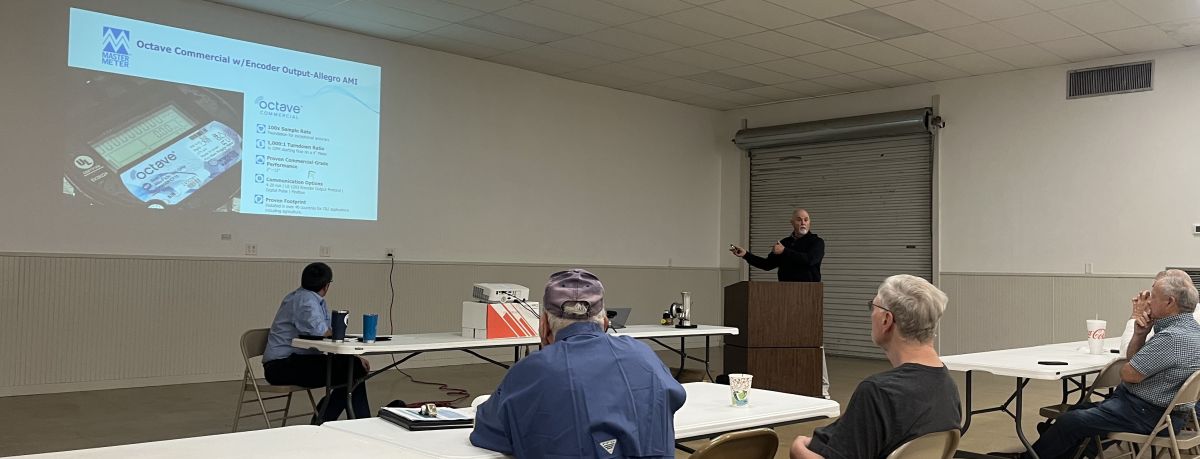
Smart meters
- The District is upgrading to Master Meter Allegro smart water meters. Our current meters communicate by radio to a drive-by receiver once per month. The new meter system will communicate daily with a central base station, which transmits them to cloud storage, where our billing system can retrieve them.
- Soon we will roll out the “MyWaterAdvisor” app from Master Meter. This will give you access to hourly water usage data from your meter, and enables you to set up notifications to alert you to abnormal water usage.
- Currently, about 7% of the system has been changed over already. Once the app is available, we will reach out to those of you who have one of the new meters so that you can set up your accounts.
- There will be no cost to the customer for the new meters.
Impact Fees
- This community is making some significant investments in infrastructure so that capacity is available to continue the growth that keeps this place so vibrant and healthy. We use impact fees to recover a portion of that investment from each new home that is added to the system. This ensures that existing customers are not shouldering the entire cost of improving the system.
- The impact fee update process is underway.
- We engaged a third party CPA to perform an audit of the existing impact fee program, and the report is available on the impact fee page.
- The WSUD Capital Improvements Advisory Committee, which is required by Texas Local Government Code Ch. 395, was created last fall. Membership includes two WSUD Directors and three local representatives of the real estate development industry.
- The Land Use Assumptions and Capital Improvement Plan (LUA/CIP) is available on our impact fee page.
- The next step is to set a date for a public hearing to review the planning information and the impact fee calculation.
- The Committee, the Board of Directors, and staff are all dedicated to deciding on an updated impact fee that all stakeholders can get behind.
Summer Water Conservation (presentation available here)
- The Stage 1 watering schedule begins automatically on June 1st each year.
- People often apply far more water than their landscaping requires to stay healthy. This can lead to moldy, unhealthy grass and large water bills that aren’t necessary.
- Turfgrass research suggests that landscaping in our area needs about 1 inch of water per week (including rainfall), even during the heat of the summer.
- We recommend getting a smart irrigation controller to reduce your water bill and improve your yard’s health, or:
- Purchase a set of catch cans and determine the application rate of your sprinkler system.
- Install a rain gauge and monitor it, keeping track of how much rainfall your yard receives.
- Use your sprinkler system to supplement rainfall so that your yard ends up with around 1 inch by the end of the week. If you get half an inch of rain, you should run your sprinklers enough to apply another half an inch to get to one inch total for the week.
- Test your sprinkler system in daylight to find leaks – geysers are obvious, but check the ground around each head to find subsurface leaks that add up to huge water loss.
- If you notice runoff on your hard surfaces, make sure your heads are aligned, and make sure you aren’t over applying water – if you put too much at one time the ground can have trouble absorbing it – that’s your hard earned money running down the ditch!
- Watch for our daily water usage updates on our Drought Contingency page and also on social media.
- Please follow our Stage 1 Watering schedule to minimize your irrigation bill and help us keep up with demand at the same time!
Please consider joining us next year (2027) for an event at the TAMU Teaching Gardens. More details early next year!
You can find the materials from the presentations here.
WSUD Town Hall Summary
April 26, 2025 | Wellborn Community Center
Event Overview
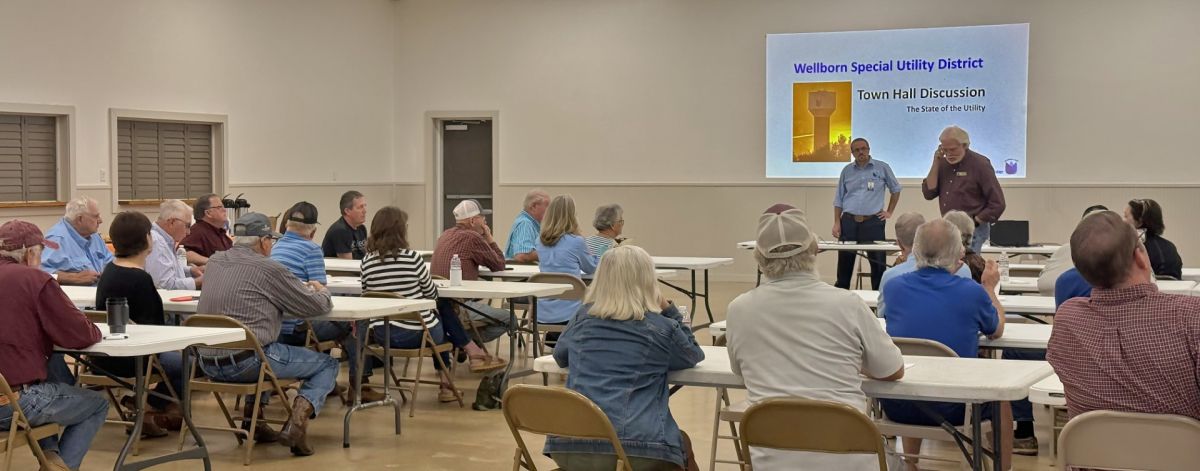
Thank you to all who attended the Wellborn Special Utility District (WSUD) Town Hall.
We appreciated the opportunity to update the community on the state of our utility, the challenges we face, and our plans to secure a clean, reliable water future.
Key Discussion Points
- Growth and Demand: WSUD now serves over 10,000 customers across a 260+ square mile area, with growth of 2-3% per year and potential for the customer base to double within the next decade.
- Infrastructure Status: Our system includes nearly 600 miles of pipeline, multiple wells, and a surface water plant. We currently rely heavily on our partnerships with Bryan and College Station, especially in the summer. Although we recently doubled our storage capacity with a new elevated storage tank, we need to expand our production to continue growing.
- Water Supply Project: Originally estimated at $45M, the supply project costs have increased to approximately $75M due to inflation and material/labor shortages. The project has been delayed by regulatory reviews but is ready for bidding once final approvals are received.
- Regional Water Competition: External demands on our aquifer could significantly reduce local groundwater availability, requiring costly alternative sourcing and infrastructure modifications.
- Financial Planning: Funding has been secured for the original project scope. Additional financing strategies are being explored to meet the updated cost estimates. Any necessary future rate adjustments will be carefully evaluated after project bids are received.
Community Guidance and Conservation
We emphasized the importance of wise water use, particularly irrigation management, to help sustain our resources and manage costs. Simple steps like adjusting sprinkler systems and considering drought-tolerant landscaping can make a big difference.
Visit our Landscape Irrigation Education page for details on water-efficient best practices for your sprinkler systems.
What's Next
- Final project bids expected by Summer 2025
- Board decisions on construction implementation strategies
- Continuous monitoring of regional water issues and regulatory developments
- Continued transparency and communication with customers
Stay Engaged
We encourage all customers to stay informed by visiting www.wellbornsud.com and signing up for WSUD alerts as well as following us on social media. Your feedback, understanding, and conservation efforts are critical to our collective success.
IMPORTANT! In our drive to improve communication we are implementing some new services that will require updated contact information to work properly. Please update the contact information we have on file for you, especially your mobile phone and email address, by calling 979-690-9799 or filling out a ticket on our contact us page.
Community Q&A
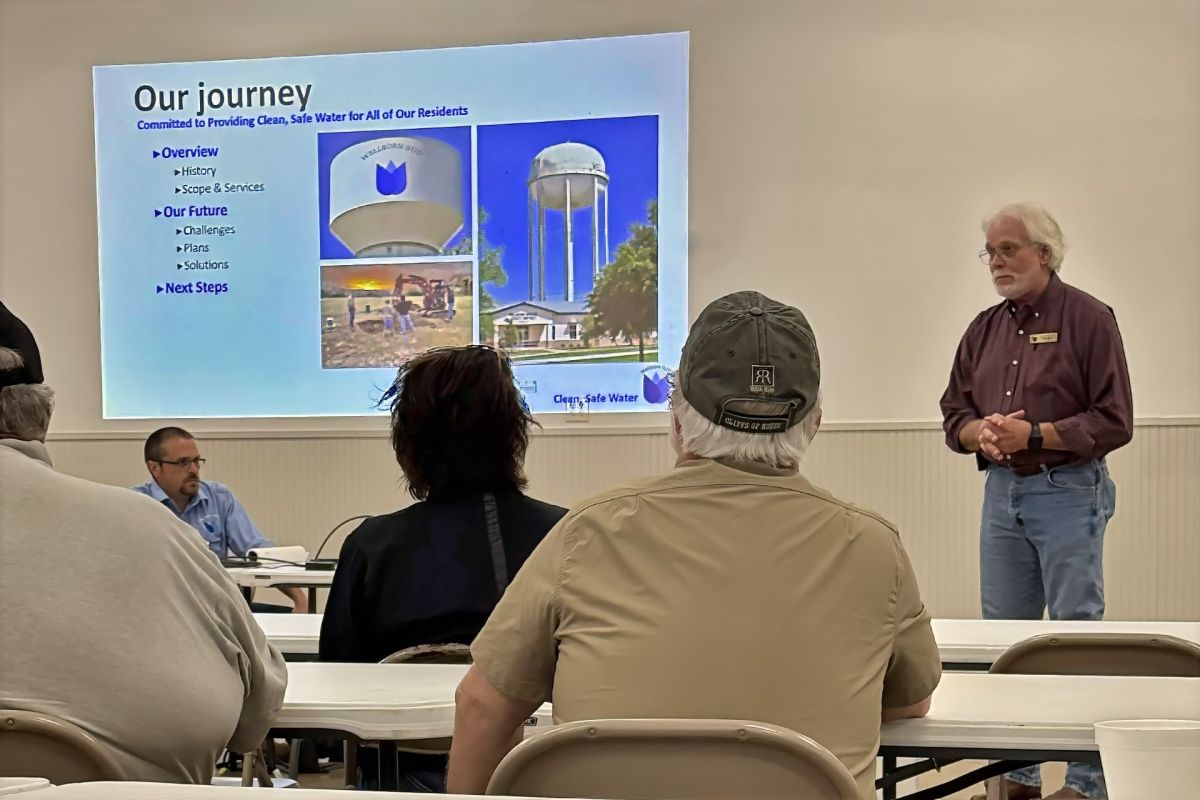
We are committed to transparency as your elected Board of Directors and professional staff. Below is a list of questions that have been asked at Board Meetings and the recent Town Hall gathering. If you have other questions that aren’t addressed here–please let us know!
WATER RATES & BILLING
Q: Why are water rates being considered for an increase?
A: Rate increases help ensure Wellborn SUD can maintain a reliable water system by funding critical infrastructure projects, replacing aging equipment, and preparing for future growth. Our priority is to maintain quality service while minimizing long-term costs.
Q: How much will my water bill go up?
A: Any proposed changes will be based on a cost-of-service study and will be communicated clearly before implementation.
Q: Will rates be structured to protect low-income or low-usage customers?
A: We already have tiered rate structures that reward conservation and lessen the burden on households with modest water use.
Q: Can I see how my water usage compares month to month?
A: Currently, we provide usage information through bills as well as a customer portal that provides monthly usage information. We are making progress on upgrades to these systems to constantly improve customer access to information about water usage.
CAPITAL IMPROVEMENTS & INFRASTRUCTURE
Q: What specific projects are driving the need for more funding?
A: Projects include new water line extensions, added storage capacity, upgraded treatment systems, and increased infrastructure to support anticipated growth in the district.
Q: How does the Board decide which projects to prioritize?
A: Prioritization is based on system needs, safety, regulatory requirements, and growth trends. The Board reviews engineering recommendations and public feedback before making funding decisions.
WATER SUPPLY PROJECT STATUS
Q: Why aren’t the new wellfield, treatment plant and pipeline projects done yet?
A: The WSUD recently received approval for the well project from the Water Development Board. Immediately after receiving that approval the WSUD Board of Directors, on May 20th, authorized the well portion of this project to go out for bids. In the months ahead, we expect to get approval from the Water Development Board to move forward with the treatment plant and pipeline portions of this project. The WSUD Board will then authorize these projects for bid. The project was originally targeted for completion by June 2024. Although fully designed and funded since 2022, delays in regulatory review processes—first with federal agencies, then with the Texas Water Development Board (TWDB)—have prevented the project from moving forward.
Q: Why did the project costs increase?
A: COVID-related disruptions and global supply chain issues caused a steep rise in construction and labor costs. The original funding secured in 2022 was based on pre-inflation estimates, and prolonged delays in permitting have caused costs to climb significantly.
Q: Why don’t you just stop setting taps and refuse to serve new developments?
A: Wellborn SUD is legally required to provide service to properties within its service area under state law. As the holder of a Certificate of Convenience and Necessity (CCN), we must serve customers in our territory or allow them to seek service elsewhere—which would undermine our ability to plan and invest in regional water infrastructure.
A moratorium on new connections could also harm the local economy and drive housing prices higher. Just as importantly, the financial model for our water supply project relies on adding new customers over time to help spread out the cost. Without that growth, rates for existing customers would need to rise significantly to pay for the project.
Q: Why are Wellborn’s water rates higher than nearby cities?
A: Our rural setting means fewer meters per mile of pipeline, which raises infrastructure costs per customer. Also, cities like Bryan and College Station built their systems decades ago at lower cost and benefit from economies of scale and tax revenue. Wellborn SUD does not have taxing authority—our revenue comes solely from water bills and impact fees.
Q: Didn’t the new water tower fix everything? Why are there still summer watering restrictions?
A: The new IGN tower resolved our storage issues, but we still face production limitations until the new supply project is completed. Restrictions are needed to ensure we don’t use more water in a day than we can replenish, which would compromise system performance during high-demand periods.
CONSERVATION & CUSTOMER TOOLS
Q: Does the WSUD have existing policies on water conservation?
A: Yes, the Utility does have policies that encourage voluntary conservation efforts as a method of stretching our existing water supplies as much as possible. The State requires all water utilities to have conservation policies. We call this the District’s Drought Contingency Plan and Stage 1 of that plan begins every year on June 1st. You can find more details about this Plan by clicking here.
Q: What else can I do to conserve water at home?
A: Common actions include checking for leaks, installing low-flow devices, reducing outdoor irrigation, and only running dishwashers or washing machines with full loads. Educational materials are available on our website.
Q: Will conservation be enough to avoid rate increases?
A: Conservation helps, but infrastructure still requires investment. Rate adjustments ensure the system is financially sound, even as usage patterns evolve.
GROWTH & LONG-TERM PLANNING
Q: Is the district preparing for regional growth?
A: Yes. Our capital plan anticipates population and development increases, with infrastructure sized to meet future demand while maintaining current service quality.
Q: Will current customers be paying for new developments?
A: Our approach aims to balance costs so that new developments contribute fairly through connection and impact fees, while still investing in the needs of existing customers.
Q: Is there a plan to expand the system’s water sources?
A: Our long-term planning includes water supply reliability, with strategies to secure additional sources and build redundancy as demand increases.
TRANSPARENCY, OUTREACH & GOVERNANCE
Q: How can I stay informed about projects and rate changes?
A: Updates are posted to our website, shared via email alerts, and included in billing inserts. We are working to expand communication tools, including a customer newsletter.
Q: How can I find out about future meetings?
A: We will provide notice through email, social media, and community postings to reach more customers. We are committed to ensuring all rate payers know about our meetings.
Q: Can customers attend Board meetings or share input?
A: Yes. All Board meetings are open to the public, and we welcome customer feedback during designated comment periods. The Board has regularly scheduled meetings on the third Tuesday of each month at 6:00 p.m. at 6784 Victoria Avenue (near the big water tower). Please be sure to check our website for meeting notices and agendas.
Q: Is there a way to offer feedback outside of meetings?
A: Yes. You can contact us by phone, email, or submit comments through the contact form on our website.
SERVICE RELIABILITY & WATER QUALITY
Q: Is the water safe to drink?
A: Yes. Wellborn SUD meets or exceeds all state and federal water quality standards. Regular testing and compliance reports are available on our website. In fact, Wellborn just took first place in The Great Texas Water Taste Test from the Texas Rural Water Association. We are proud of our staff!
Q: What is being done to prevent water outages or service disruptions?
A: System upgrades and maintenance are central to improving reliability. New investments will help reduce the likelihood of outages and ensure backup capacity during high demand or emergencies.
Community Events Calendar -Check back here for future events